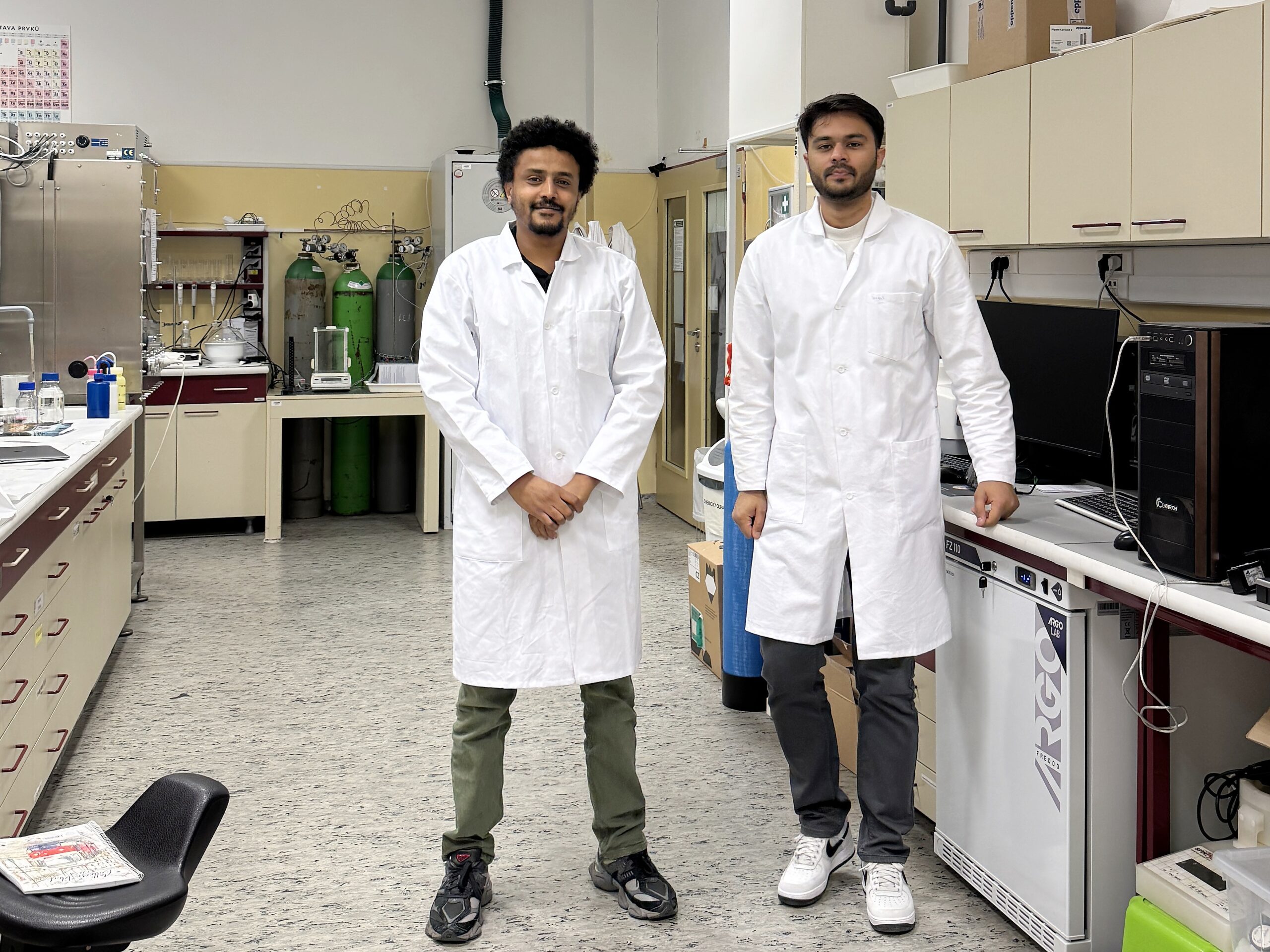

Thanks to the LESIA project, doctoral students from the University of Trieste gained new experience at CATRIN
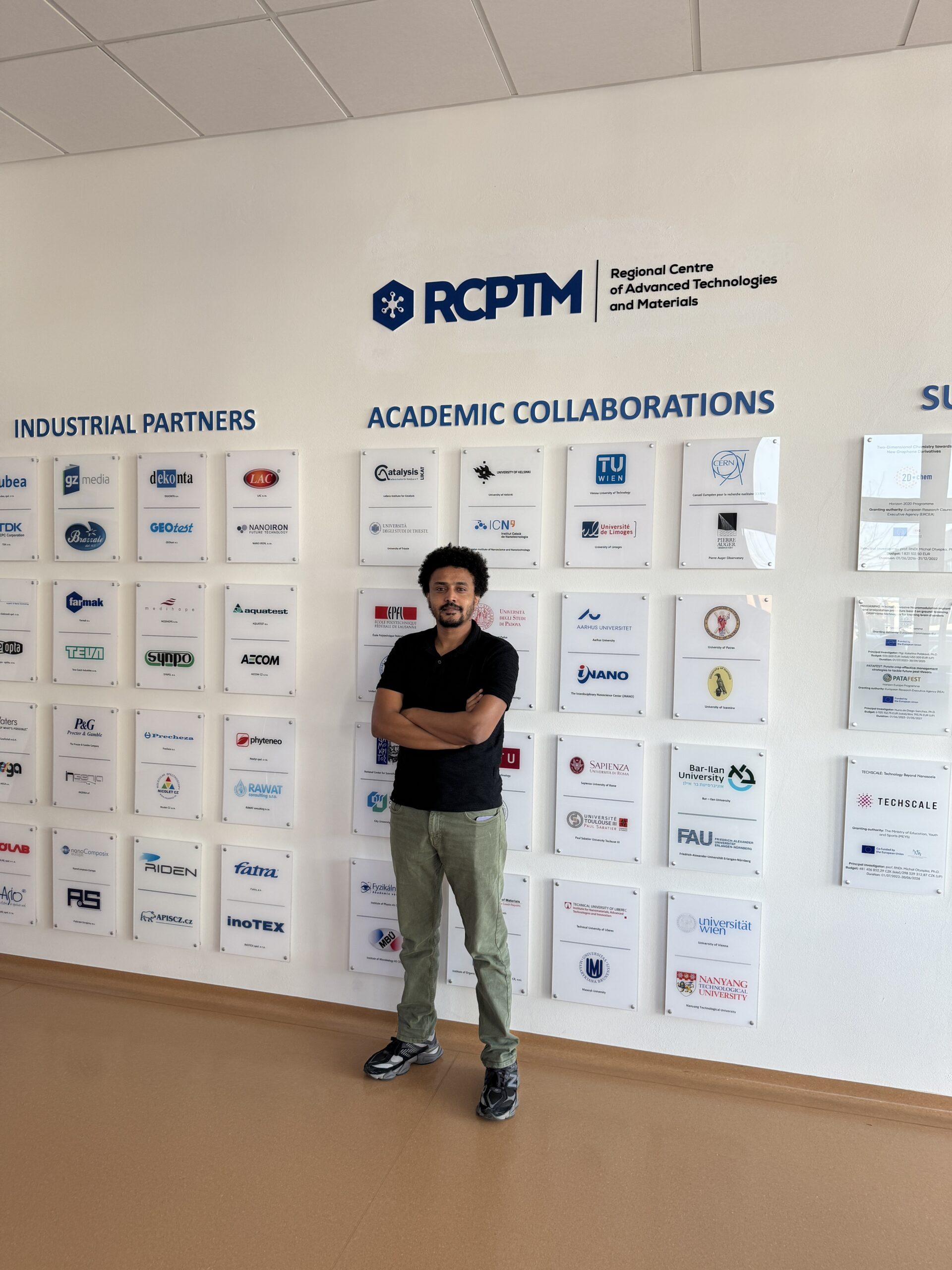
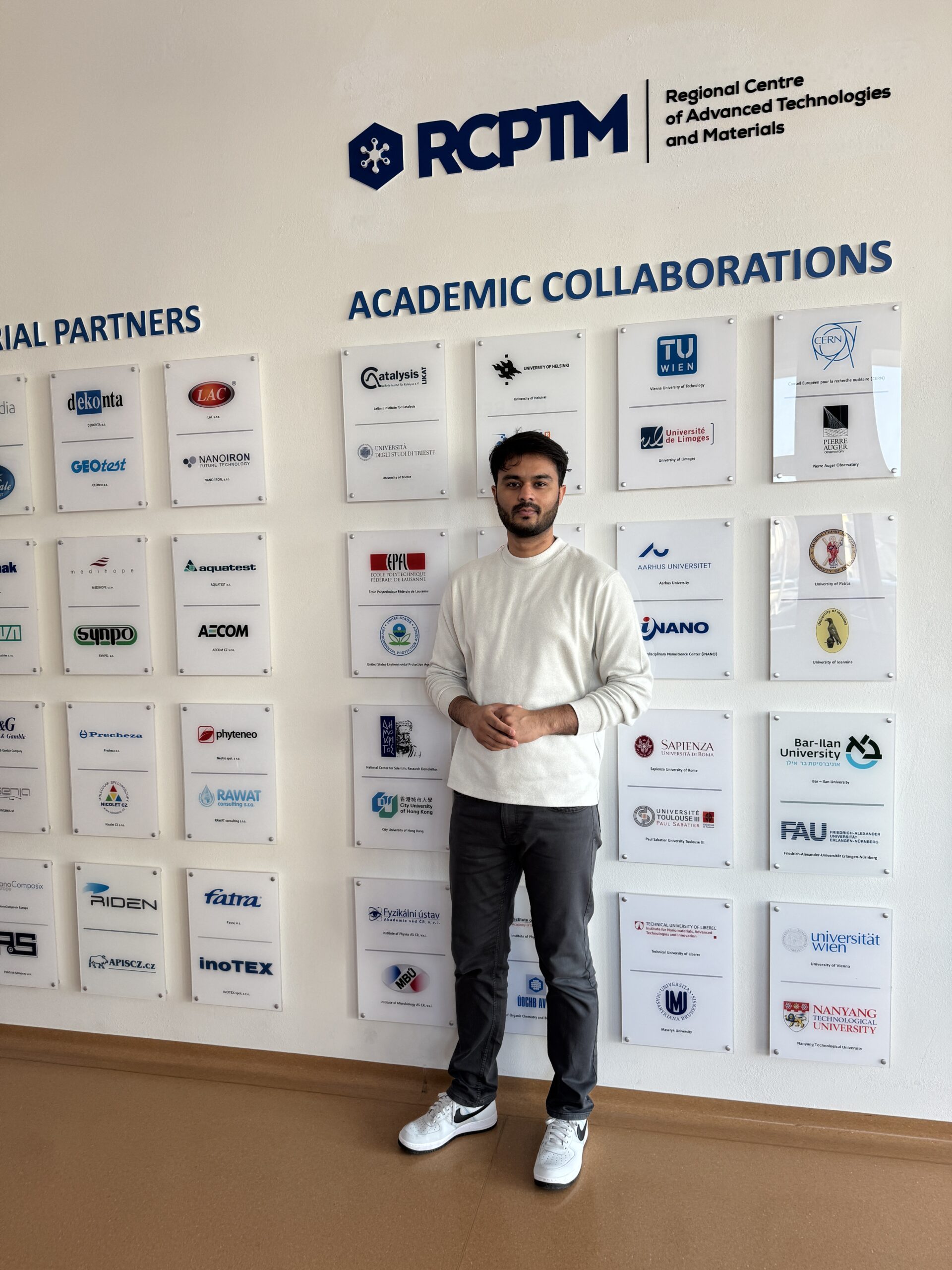
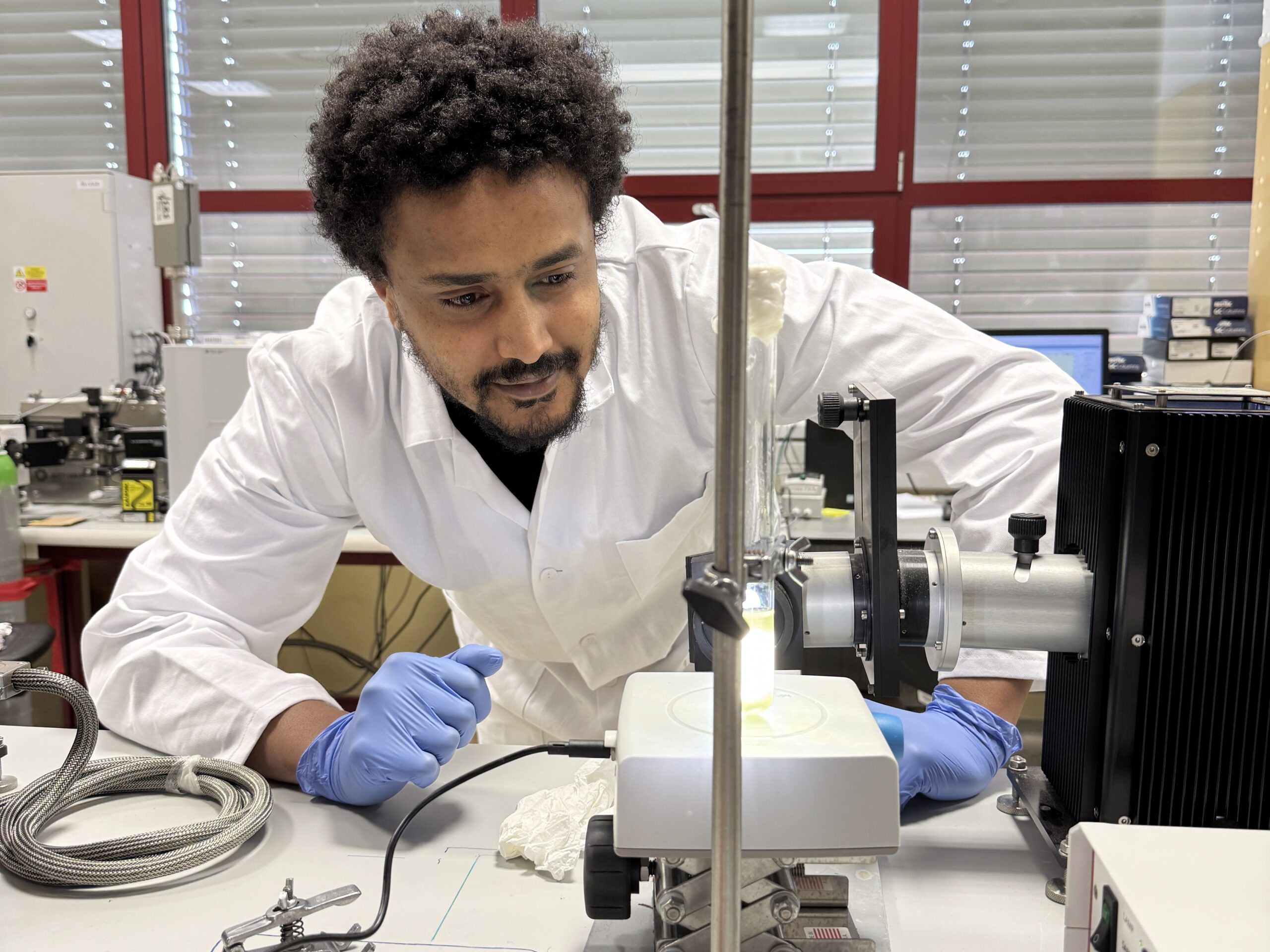
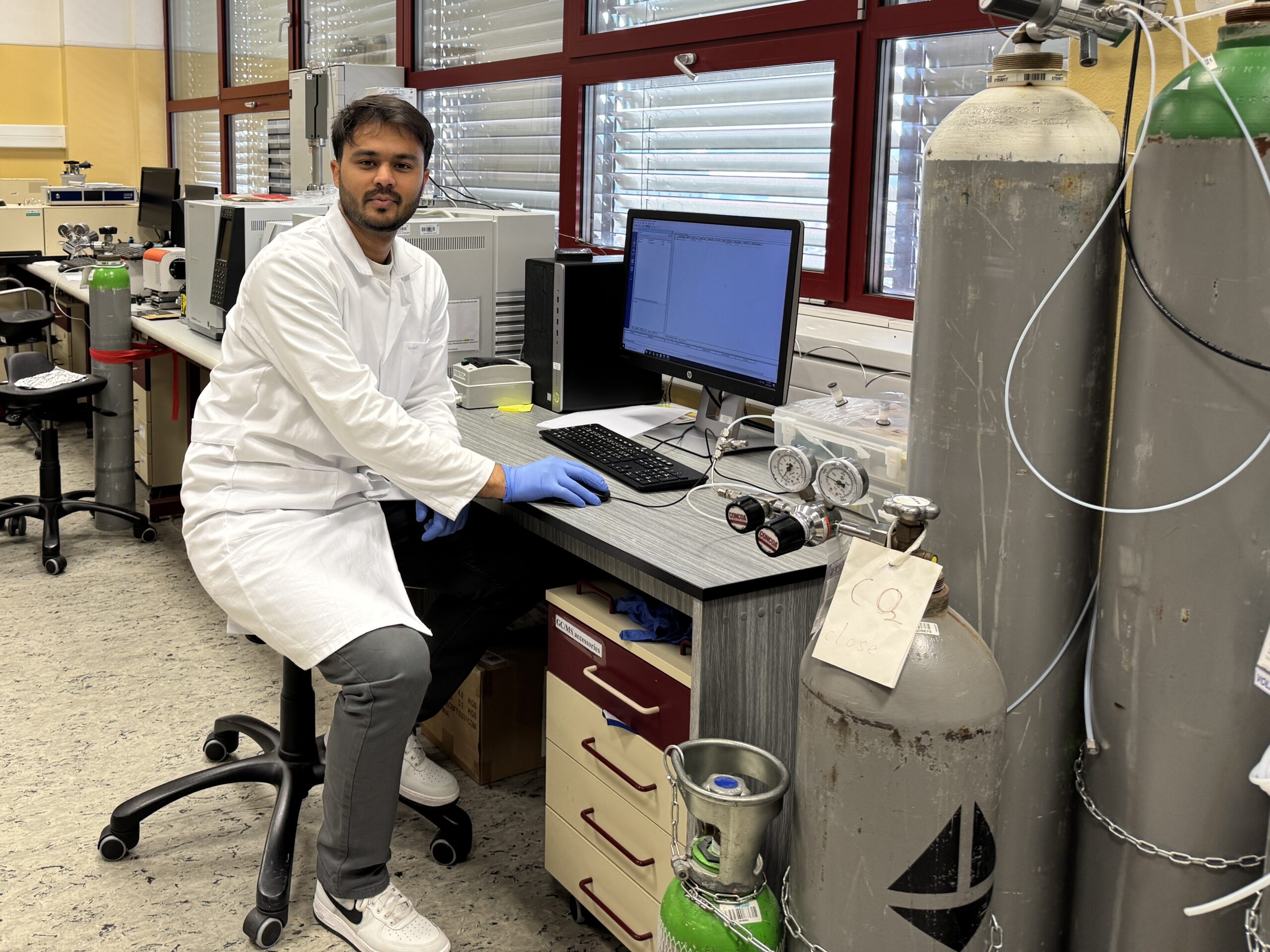
Doctoral students Melaku Mekuria and Waqas Hakim focused on the synthesis and characterization of materials for energy storage during their internships at CATRIN at Palacký University. Both young scientists from the University of Trieste gained new experience in Olomouc as part of the international LESIA project: Laser Engineered Surfaces/Interfaces for Advanced Batteries. At CATRIN, they particularly appreciate the international environment and the many opportunities for collaboration.
Since October, Melaku Mekuria has been working at CATRIN on the synthesis and study of chiral carbon quantum dots. His research goal is to clarify the role of chirality and synthetic parameters in controlling the properties of materials important for energy applications.
“My stay at CATRIN has been very enriching. The institute offers an excellent interdisciplinary research environment, strong professional support, and numerous opportunities for collaboration. Working here has allowed me to gain a deeper understanding of materials and interfaces for energy applications and to link theoretical knowledge with experimental research carried out at large research infrastructures,” said the scientist, who, in addition to his doctoral studies, also works at the Elettra Sincrotrone Trieste international research center.
He intends to use the experience gained at CATRIN to further develop his research into chiral nanomaterials and their role in charge transfer processes and at interfaces. “The knowledge gained through the LESIA project will help me design more efficient materials for energy storage and conversion and will guide my future work combining advanced spectroscopy, surface engineering, and functional nanomaterials,” added the scientist, who will complete his internship in early April.
Waqas Hakim, who has been working at CATRIN since October, will return to his home workplace at the end of January, completing already his second internship. His main research topic is the synthesis of quantum dots for applications in energy production and storage. He specializes primarily in MXene-based quantum dots and the modification of their surface chemistry to improve their properties.
“Being in a new research environment helped me learn new techniques, gain practical experience with different instruments, and look at my research from a different angle. Interacting with new people, exchanging ideas, and working closely with researchers also boosted my confidence and motivation and contributed to my further development, not only in my professional life,” said Waqas Hakim, summarizing the benefits of the internship.
Štěpán Kment, the head of the Photoelectrochemistry research group at CATRIN, described both young scientists as exceptionally gifted. “Working with them has been excellent, which is clear from the fact that Waqas has completed already a second several-month internship in our research group. Both have integrated very well into the team, not only professionally but also personally. Together we are currently completing comprehensive scientific work with very promising results, which will soon be sent for review to the editors of high-quality international scientific journals. At the same time, we have other joint projects underway that will further deepen our cooperation with the University of Trieste,” said Kment.
LESIA aims to develop an innovative approach to battery development using laser and chemical treatments of electrode surfaces. Researchers at CATRIN have extensive experience in this field. The four-year project from the Marie Skłodowska-Curie Actions (MSCA) program officially began in March 2024 and, under the leadership of Aarhus University, involves partners from Denmark, Germany, Spain, Italy, and the United Kingdom, as well as colleagues from Hong Kong and China as associated partners. Researchers from CATRIN are also preparing for longer-term research stays at foreign institutions involved in the LESIA project consortium.